
Rav Yehuda Assad of Szerdahely zt"l
הרב יהודה בן שמואל אסאד זצ"ל
Sivan 23 , 5626
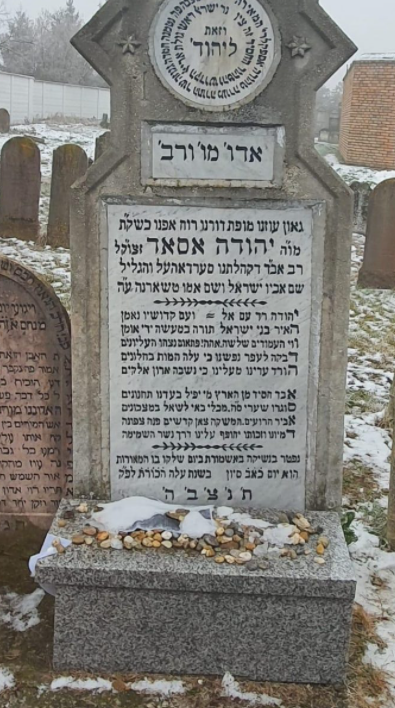
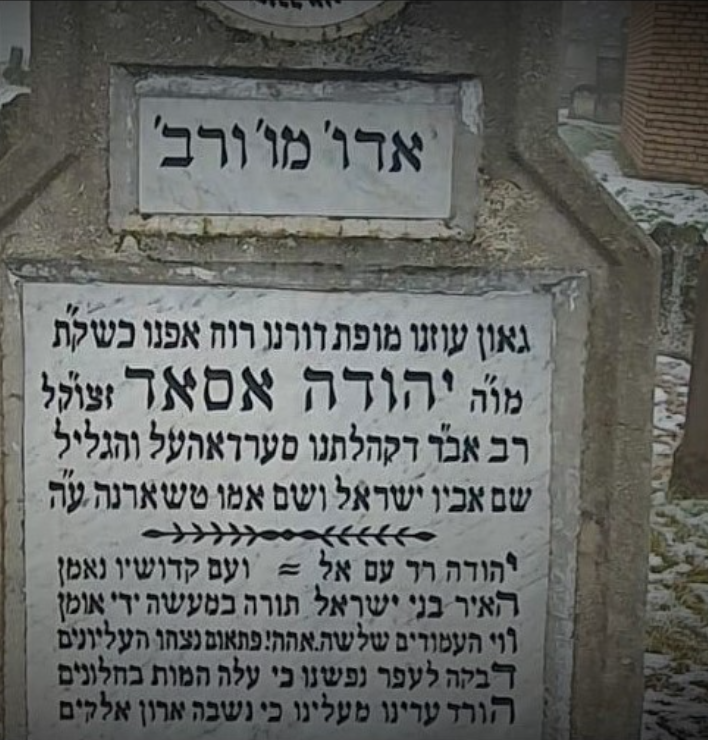
Rav Yehuda Assad of Szerdahely zt"l
The Gaon Rabbi Yehuda Assad was amongst the senior rabbis and Heads of Yeshiva in Hungary. He was a disciple of Rabbi Avrohom Suditz and Rabbi Mordechai Banet. He served as rabbi in Semnitz and Serdihal. He was appointed as rabbi by the Chasam Sofer. Together with the Ksav Sofer and the author of Yeriot Shlomo he stood at the helm of the Orthodox Jewry in Hungary. Some of his books: Responsa of the Mahari – Yehuda Ya'aleh, Novella of the Mahari on the Talmud, Divrei Mahari on the Torah.
https://www.kedem-auctions.com/en/content/two-letters-rabbi-yehuda-assad
Stories of Rav Yehuda Assad of Szerdahely zt"l

The Chasam Sofer decided that because of the changes brought about by the Reform movement, Orthodox Jews should create separate communities for themselves in Hungary. However, first it was necessary to receive royal approval for this. Therefore, the Rabbonim sent a delegation of five of the most famous Rabbonim and Tzaddikim of Hungary to the Kaiser Franz Josef. Among the delegation were Rav Yehudah Assad, the famous mechaber of Yehudah Ya’aleh, Rav Akiva Yoseph, and his father-in-law, Rav Hillel of Kolomy. Rav Akiva Yoseph, in his sefer Bris Olam, relates that the night before their meeting with the Kaiser, he was lodging with his father-in-law. In the middle of the night he was awakened by Rav Hillel, who asked him, “Are you asleep?”
Rav Akiva Yoseph replied that he was awake.
“Do you see anything?” asked Rav Hillel of his son-in-law. “No,” came the answer.
After a while Rav Hillel asked again, “Do you see anything?” Again, Rav Akiva Yoseph replied, “No, I don’t see anything.”
After that, Rav Hillel woke him once again with the same question, and once again Rav Akiva Yoseph gave the same reply. But this time Rav Hillel explained, “I just saw the Chasam Sofer in a dream and he told me, “You have davened well. Go to the Kaiser, and your mission will be successful.”
The next morning the entire delegation went to the Kaiser’s palace. They found all the gates open, with no guard or anyone else to stop them or ask them questions; so they walked right in to the palace grounds. The Kaiser was taking his morning stroll, wearing a simple house robe.
When the Kaiser saw them, he exclaimed, “Five angels!”
The members of the delegation had removed their hats, as is customary when standing before a king. Rav Assad approached the king and said, “If His Majesty will allow it, I would like to put on my hat so that I can recite the blessing we say when we see a king.” The Kaiser graciously answered, “Of course, but please wait a minute.”
Then the Kaiser went into the palace and put on his crown, and afterwards Rav Assad and the others recited the berocha: “Who has imparted of His honor to flesh and blood.”
Afterwards the Kaiser asked them the purpose of their visit.
The Rabbonim had originally planned that one of them, a talmid of the Chasam Sofer, would present their request; but now he found himself unable to open his mouth. The Kaiser realized that the young man was overcome with awe before him and therefore could not speak. He said, “Instead of speaking, just put your request in writing, and whatever you wish, I will grant.”
They immediately wrote their request, that the Kaiser give them the necessary recognition so that they could function as a separate community with due legal authority.
The Kaiser took their request and, without even reading its contents, folded it. This was the royal sign that the request had been granted.
Afterwards, the Kaiser was about to take leave of his five guests, but first he asked for a blessing from Rav Assad, who appeared to him as handsome as an angel. Rav Assad blessed him with a long life and a long and successful reign. It is known that the blessing was fulfilled, for the Kaiser was still reigning at the age of eighty-four.
When they left the Kaiser, they met the palace director, who was astonished to discover that five strangers had entered the palace without any hindrance. He asked them,
“How did you enter without permission?”
They answered, “No, we are not entering. We are leaving.” Upon hearing this he was so astonished that he simply walked away.
(She’al Avicha Veyagedcha I, page 85.)
Rav Ovadia Yosef used to illustrate this Mishna with the following story:
There was a chasuna in Hungary of one of the leaders and parnesei kehilla, to which all the greatest Rabbonim were all invited. There they rejoiced, sang, danced and sat to enjoy the seudas mitzva. In honor of the momentous occasion, Rav Avrohom Binyomin Shmuel Sofer, mechaber of the Ksav Sofer, stood up and declared, “In order to mark this happy event I wanted to share something precious and unique with you all and something that will add to the joy of the event,” and so saying he removed from his pocket a silver coin and held it up for all to see.
“This,” explained the Ksav Sofer, “is a genuine Machatzis HaShekel from the times of Bayis Sheini. I have this rare coin to share with you and you can all pass it round and see it for yourselves!”
All the great Rabbonim assembled were excited to see a genuine artifact, a real Machatzis HaShekel and they all excitedly passed around the coin. After everyone had had a chance to see the coin, the request was sent to pass it back up to return it to the Ksav Sofer, but the coin did not make its way back. They tried unsuccessfully to determine who had had it last in his possession but unfortunately no one knew; the coin had simply vanished as if it it had been swallowed up by the earth.
At this point, someone locked the doors to the simcha hall and declared that there was no choice but to have everyone empty out their pockets. Obviously, someone’s desire for the coin had gotten the better of him and someone had transgressed Lo Sachmod and stolen the Machatzis HaShekel.
Hearing this, one of the Rabbonim stood up. It was the Mahari Assad, and he made an unusual request. “Please let us not ask the assembled to turn out their pockets; instead let us all wait patiently for one more half hour to see if the coin turns up.”
The Mahari Assad’s request caused some eyebrows to go up and some murmurs, but the assembled agreed, the seudas mitzva continued and eventually the time ran out, with no new developments in the case of the missing coin.
“Again I beg your patience and indulgence and ask you all to wait another fifteen minutes!” asked the Mahari Assad. During this time he was seen silently davening.
Just then a waiter burst into the room excitedly. “I have it! I have the missing coin!”
Louds exclamations from all sides. “The coin has been found!”
The waiter explained how he had found the coin in the garbage. During the commotion passing it around from hand to hand it must have been placed on the table and inadvertently been swept off the table when the waiters made their rounds clearing up.
The Mahari Assad’s face showed visible relief and he explained, simultaneously drawing out from his pocket…an identical Machatzis HaShekel coin! “Now I shall explain why I asked your patience and indulgence. You see, when I saw the Ksav Sofer’s delight, I didn’t want to spoil it by showing everyone my coin as well. Then I heard of the lost coin and the request to empty out our pockets and I was afraid no one would believe that I too had an almost identical rare coin in my pocket! I was sure I would be suspected and that someone would transgress the dictum to judge others favorably. And so I asked for a delay so that the coin might be found, and davened to Hashem that He spare me the shame of accusation and others the sin of falsely accusing me and suspecting me of wrongdoing and – boruch Hashem! My tefillos were heard.” (Anaf Eitz Avos p. 26)